If you love homes with a point of view, Mill Valley deserves a close look. In a compact city shaped by redwood canyons, hillsides, and a small downtown core, you can find everything from early cottages and village-scale homes to postwar modernist properties and contemporary rebuilds. If you are trying to match your taste to the right part of town, this guide will help you understand where Mill Valley’s architectural character shows up best, along with the practical tradeoffs that come with each setting. Let’s dive in.
Why Mill Valley Appeals to Architecture Lovers
Mill Valley packs a surprising amount of design variety into just 4.8 square miles. The city reports a population of about 14,000 residents, with housing stock that is mostly single-family and neighborhoods that often sit near shopping, parks, and civic uses.
For buyers who care about style and originality, the historic record is especially notable. Mill Valley’s 2021 Historic Resources Inventory and Historic Context Statement identify 176 potentially historic properties, with roughly 160 built before 1930, while also documenting notable postwar Bay Tradition, Midcentury Modern, and other modernist homes.
That mix gives you more than one version of architectural appeal. You are not choosing between only “old charm” or “new design.” In Mill Valley, you can often choose between village cottages, canyon cabins, early subdivision homes, and later modernist or contemporary properties.
Start With Character Areas
For architecture-minded buyers, Mill Valley is often easier to understand by character area rather than by strict neighborhood lines. Each area tends to offer a distinct visual rhythm, lot pattern, and daily feel.
Some places commonly marketed as Mill Valley are outside city limits. The city specifically notes that parts of Strawberry, Tam Valley, Homestead, Almonte, and Alto may carry a Mill Valley mailing address while falling outside city jurisdiction, so it is smart to verify both address and governing authority as you narrow your search.
Downtown for Village-Scale Charm
Downtown, Throckmorton, Lovell, and Blithedale
If you want historic scale and a true village feel, downtown Mill Valley is one of the strongest matches. The city describes this character area as wrapping around the commercial core and including some of the oldest homes in Mill Valley, along with small cottages, apartments, and condos on compact lots.
For an architecture lover, the appeal is the layered streetscape. You may see older homes beside thoughtful updates, smaller residences with original character, and a daily pattern that supports life on foot more than many hillside locations do.
The tradeoffs are practical. Setbacks can be tighter, some streets rise steeply, and parking tends to be less flexible than in larger-lot neighborhoods.
Tamalpais Park for Early Cottage Character
Sycamore and Tamalpais Park
If your taste leans toward renovated cottages and early neighborhood fabric, Sycamore and Tamalpais Park deserve attention. The city describes this area as relatively level, with a more conventional lot pattern and a variety of architectural styles and details.
Local historical material adds texture to that picture. Tamalpais Park developed with meandering, tree-lined streets that follow the creek and terrain, and the area has long included a broad range of home sizes and styles.
For many buyers, this area strikes a useful middle ground. You get architectural charm and neighborhood texture, often with an easier day-to-day layout than the deeper canyon settings.
Canyon Neighborhoods for Redwood Hideaways
Cascade Canyon and Blithedale Canyon
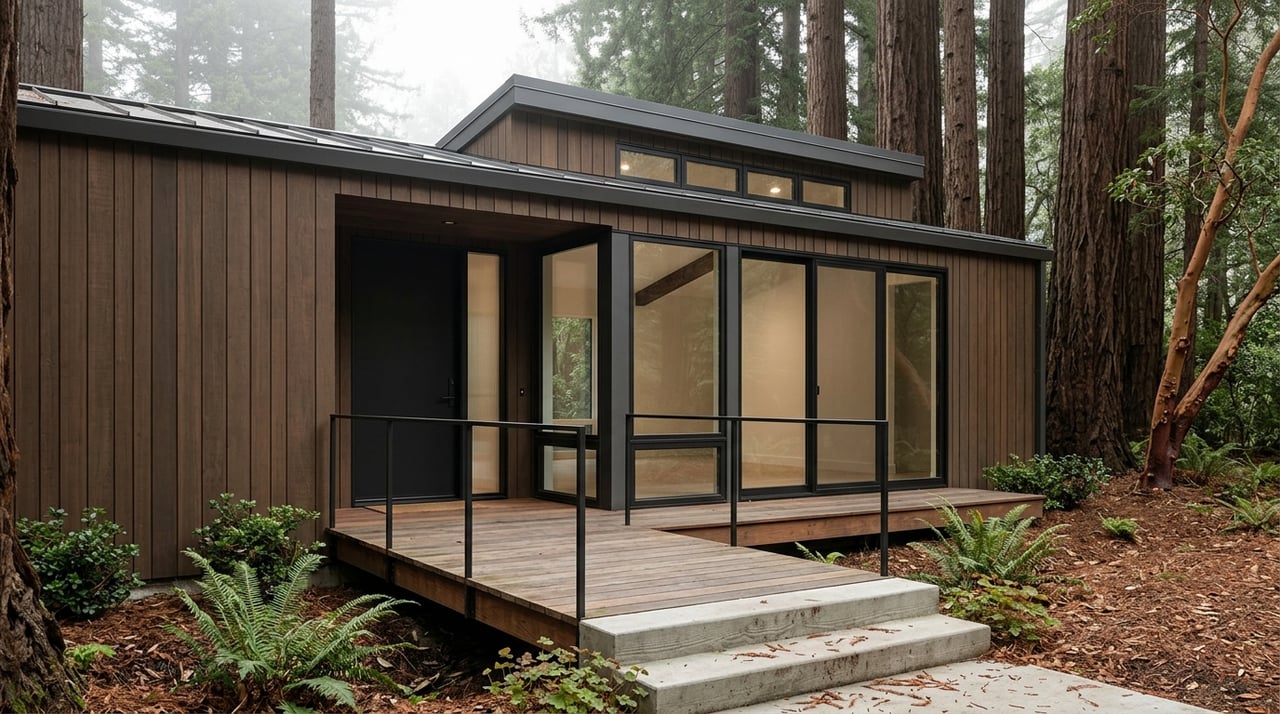
If your idea of home is a cabin-in-the-woods setting, the canyon neighborhoods are usually the clearest fit. The city describes Cascade Canyon and Blithedale Canyon as areas with narrow, winding roads, prominent redwoods and broadleaf evergreens, and a wide variety of housing types and styles.
Historical accounts reinforce that feeling. These neighborhoods grew in part from early summer and weekend cottages, with homes tucked among the trees and a long connection to retreat-era Mill Valley.
For architecture lovers, this can mean rustic forms, lodge-like details, and older homes shaped as much by terrain as by lot lines. The tradeoff is access, since hill roads can be less forgiving and daily errands may feel less convenient than they do closer to downtown.
Watch the Fringe Areas Carefully
Homestead Valley, Tamalpais Valley, and Tamalpais Canyon
These areas matter because many buyers experience them as part of the broader Mill Valley world. They can offer modest cottages, older wood-frame homes, and a softer, less polished redwood setting that appeals to buyers who value character over formality.
Their history supports that architectural mix. Local historical sources note that Homestead Valley grew from early ranch and subdivision patterns, while Camp Tamalpais began as a redwood-canyon tent community where cottages later replaced tents, and Tamalpais Valley evolved from early subdivision and rural roots before postwar growth.
The key caution is jurisdiction. Some of these addresses are outside city limits, which can affect planning rules and city services, so that question should be clarified early if you are considering a purchase or future renovation.
Postwar and Contemporary Homes
Scott Valley, Alto, Enchanted Knolls, Shelter Ridge, and Bayfront
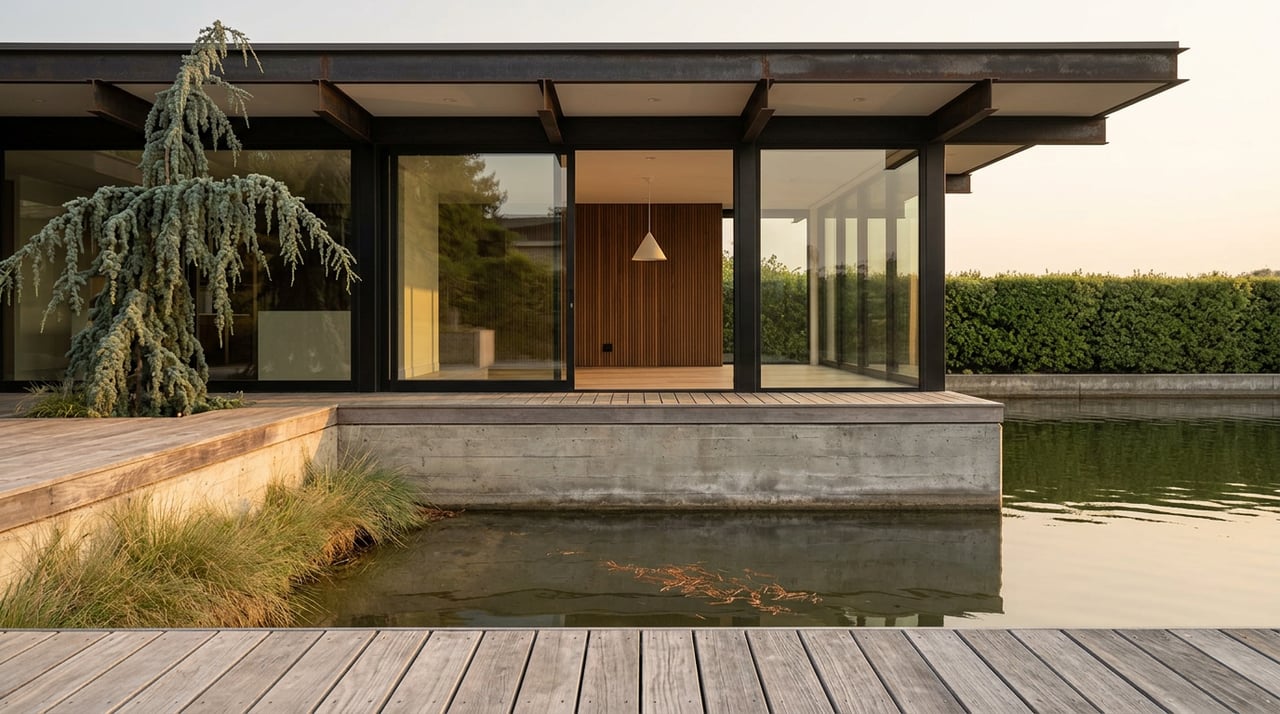
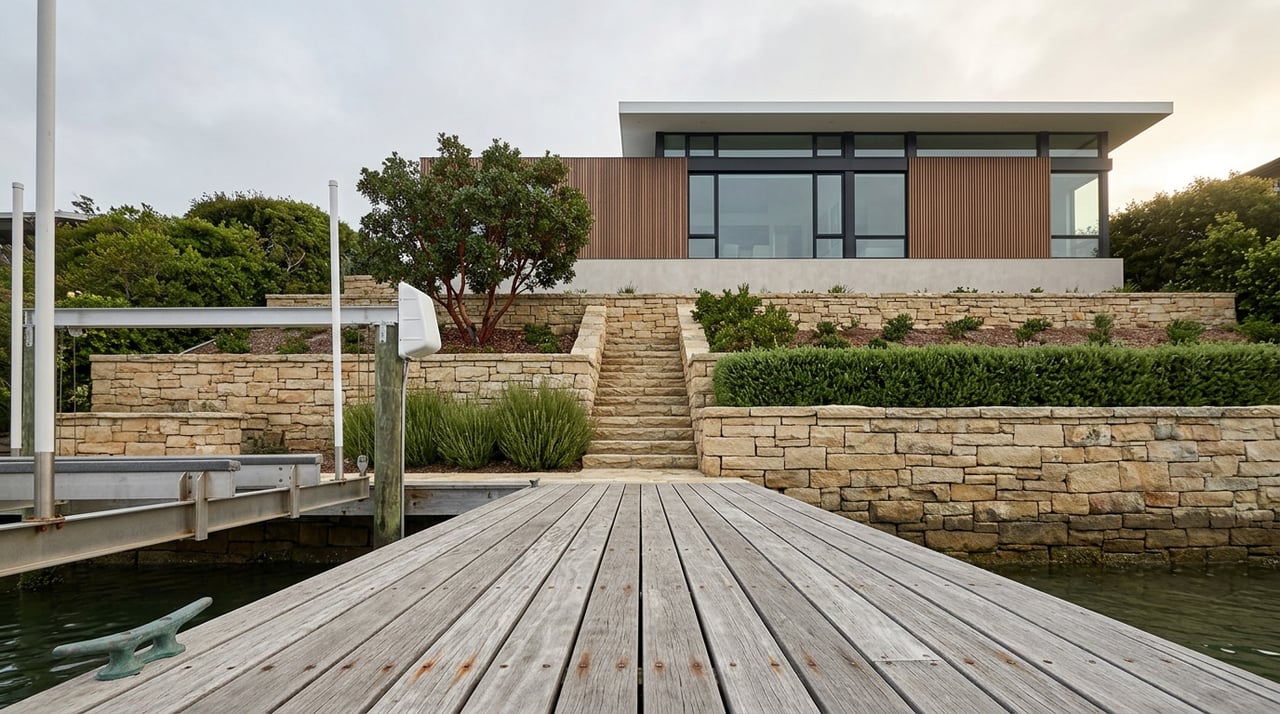
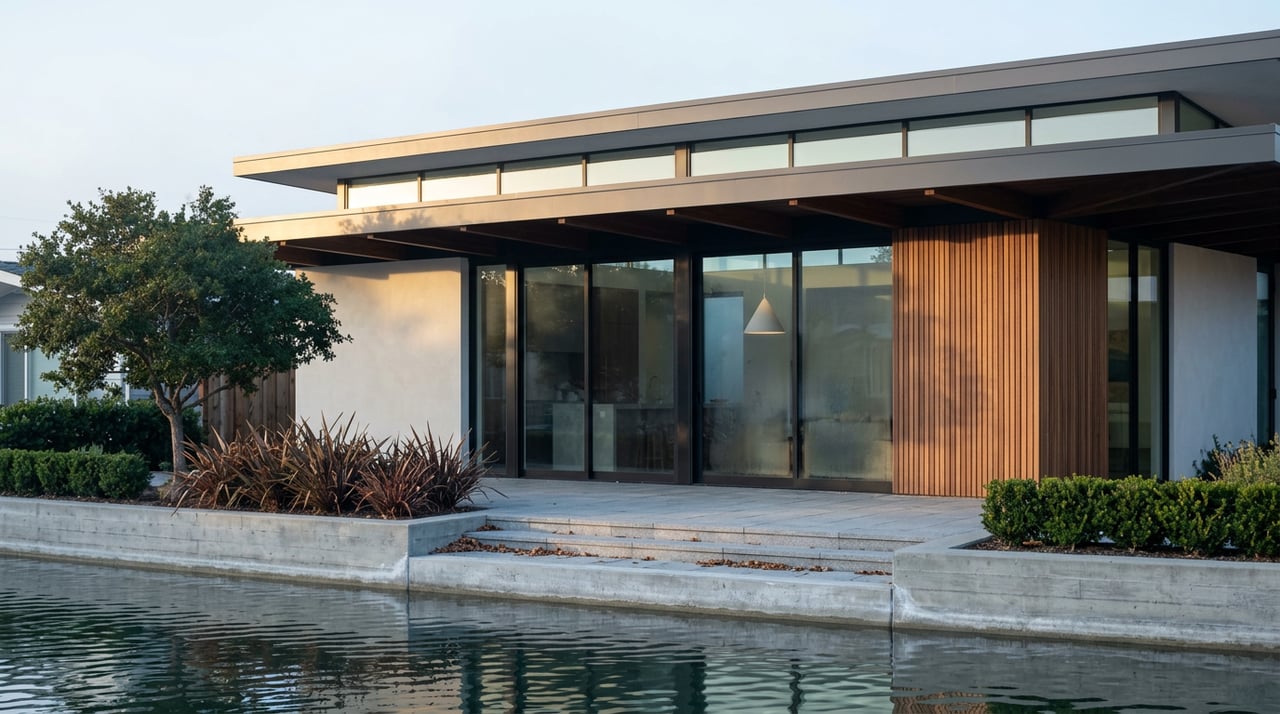
If you are looking for mid-century, Bay Tradition, postwar, or newer contemporary homes, this broad area is often the best place to focus. The city says these neighborhoods were built to more contemporary subdivision standards, ranging from larger-lot custom homes in Scott Valley to more traditional subdivision patterns in Alto and Enchanted Knolls, with larger condominium and apartment developments near the bayfront and Highway 101 frontage.
Mill Valley’s historic context also notes notable postwar Bay Tradition and Midcentury Modern examples across the city. In practical terms, this area is where many buyers are most likely to find later-20th-century architecture, rebuilt homes, and larger-scale contemporary development.
The feel here is often more suburban than canyon-like. Depending on the exact location, you may also want to weigh Highway 101 proximity and floodplain considerations near the bayfront.
A Flexible Option Near Daily Conveniences
Miller Avenue and East Blithedale
The Miller Avenue and East Blithedale corridor is less a single neighborhood than a transition zone with architectural variety. The city’s design guidelines describe a mix of one-, two-, and three-story buildings, small homes, apartments, offices, and mixed-use development, with wooded slopes and redwoods screening hillside structures along parts of the corridor.
For buyers, that can translate to flexibility. You may find a stronger live-near-everything feel here than in more secluded redwood areas, along with a wider range of home types and building patterns.
If your priority is a pure residential enclave, this area may feel more mixed in character. If you value convenience and variety, it can be worth a closer look.
Best Mill Valley Matches by Style
If you are searching with a specific architectural lens, this quick guide can help narrow your focus:
- Mid-century, Bay Tradition, and modernist homes: Scott Valley, Shelter Ridge, bayfront areas, and select hillside properties
- Cabins in the redwoods: Cascade Canyon, Blithedale Canyon, and canyon portions of Homestead and Tamalpais Valley
- Renovated cottages and early village homes: Downtown, Sycamore, Tamalpais Park, and parts of Homestead Valley
- Contemporary designs and newer custom homes: Scott Valley, Alto, Enchanted Knolls, Shelter Ridge, bayfront areas, and some Miller or East Blithedale properties
Character Versus Convenience
One of the biggest decisions in Mill Valley is not just style. It is the balance between architectural character and everyday ease.
Hillside and canyon neighborhoods often deliver the strongest privacy, redwood atmosphere, and visual drama. They can also bring narrower roads, steeper lots, and less predictable parking or access.
Flatter and more central areas usually support a simpler daily rhythm. In exchange, you may see smaller lots, tighter spacing, or a more mixed-density setting.
Downtown and Miller Avenue are generally the strongest choices for walkability. Bayfront and Highway 101-adjacent areas tend to offer newer building patterns and easier regional access.
Renovation Plans Need Extra Care
If you are buying with renovation in mind, architectural appeal is only part of the equation. Mill Valley’s preservation program includes a Historic Overlay and a Historic Resources Inventory, and the city notes that listed properties can be subject to design review for additions or alterations.
That matters if you hope to restore an older cottage, update a Bay Tradition home, or make significant changes to a property with recognized architectural value. Buyers who understand that process early are usually in a better position to plan both budget and timeline.
For design-minded buyers, this is where local guidance can make a real difference. A home’s setting, jurisdiction, and preservation status can all shape what is possible next.
If you are exploring Mill Valley with architecture front of mind, working with someone who understands both the design story and the practical details can save time and sharpen your search. To discuss neighborhoods, off-market opportunities, or a design-sensitive buying strategy, connect with Stephanie Pratt.
FAQs
Which Mill Valley neighborhoods are best for historic homes?
- Downtown, Throckmorton, Lovell, Blithedale, Sycamore, and Tamalpais Park are strong places to look for older homes, cottages, and early neighborhood character.
Which Mill Valley areas fit buyers who love mid-century architecture?
- Scott Valley, Shelter Ridge, bayfront areas, and select hillside homes are among the best matches for postwar Bay Tradition, Midcentury Modern, and other modernist styles.
Which Mill Valley neighborhoods feel most like cabins in the woods?
- Cascade Canyon and Blithedale Canyon are the clearest choices for a redwood canyon setting, with wooded lots, winding roads, and older rustic homes.
What should buyers know about Mill Valley mailing addresses?
- Some homes marketed as Mill Valley are outside city limits, including parts of Homestead, Tam Valley, Alto, Almonte, and Strawberry, so you should verify jurisdiction as well as mailing address.
Do historic homes in Mill Valley face renovation review?
- Yes, some listed historic properties may be subject to design review for additions or alterations under the city’s preservation program.
Which Mill Valley areas are easier for walkability and daily errands?
- Downtown and the Miller Avenue corridor are generally the strongest options if you want to live closer to shops, services, and a more convenient daily routine.