A Belvedere Lagoon closing rarely stalls on the inspection contingency. It stalls on a signature that has nothing to do with the house.
Lagoon-front lots sit on land whose water is owned outright by a private association, not by the city and not by the homeowner. Before a Lagoon sale can close, the incoming buyer typically has to sign a new membership agreement with that association, and title companies that work this stretch of Marin build that step into the escrow timeline as a matter of routine. Skip it, or discover it late, and a deal that looked finished on paper still has a loose end. It is the kind of friction that never shows up on a listing sheet, and it exists only because of where the property sits on the map. A house three streets away, on the hillside above, has no such requirement at all.
That gap is the real story hiding inside every "Belvedere" headline number.
One Zip Code, Two Markets
Search for Belvedere real estate and the portals will hand you a single blended figure: a town-wide median sale price, a town-wide days-on-market count, a town-wide price per square foot. It reads like one market. It is not.
Belvedere is built across two physically and structurally different settings. Belvedere Island is hillside terrain, largely unobstructed water views, and land so scarce that a meaningful share of sales never make it to public listing at all. Belvedere Lagoon is flat, enclosed, and governed day to day by a private nonprofit that most buyers have never heard of before they start shopping there: the Belvedere Lagoon Property Owners' Association.
These aren't just two neighborhoods with different views. They are two different cost structures, two different governance systems, and two different reasons a buyer ends up paying what they pay. Blend them into one median and the number stops describing either one accurately.
What the Island Actually Sells On
Belvedere Island trades on scarcity and sightline, full stop. The city itself has no commercial strip, no grocery store, nothing to zone around except houses on a hill, which means every transaction is really a transaction in unobstructed bay exposure and buildable land.
The evidence shows up in the recent headline sales. A 8,100-square-foot home at 445 Belvedere Avenue, designed by architect Charles Gwathmey and completed in 2020, had its asking price cut to $22.9 million by February 2026, according to reporting picked up by The Real Deal, which pegged the reduced price at roughly $3,690 per square foot. The same report noted that former Apple design chief Jony Ive had purchased four properties near that address for a combined $73 million the previous September, a scale of buyer that only shows up where land itself, not square footage, is the product.
Separately, Robb Report featured a Belvedere Island hilltop estate listed near $50 million in May 2026: a modernist house designed by architect William Wurster with landscaping by Thomas Church, originally built in 1967 for a state deputy attorney general, sold only once more before its current owner put roughly $5 million into a two-year renovation. The number that matters here isn't the $50 million ask. It's that the price is anchored to the pedigree of the architect and the specific hilltop parcel, not to a comparable set of recent nearby sales, because there often aren't enough recent nearby sales to comp against.
What the Lagoon Actually Sells On
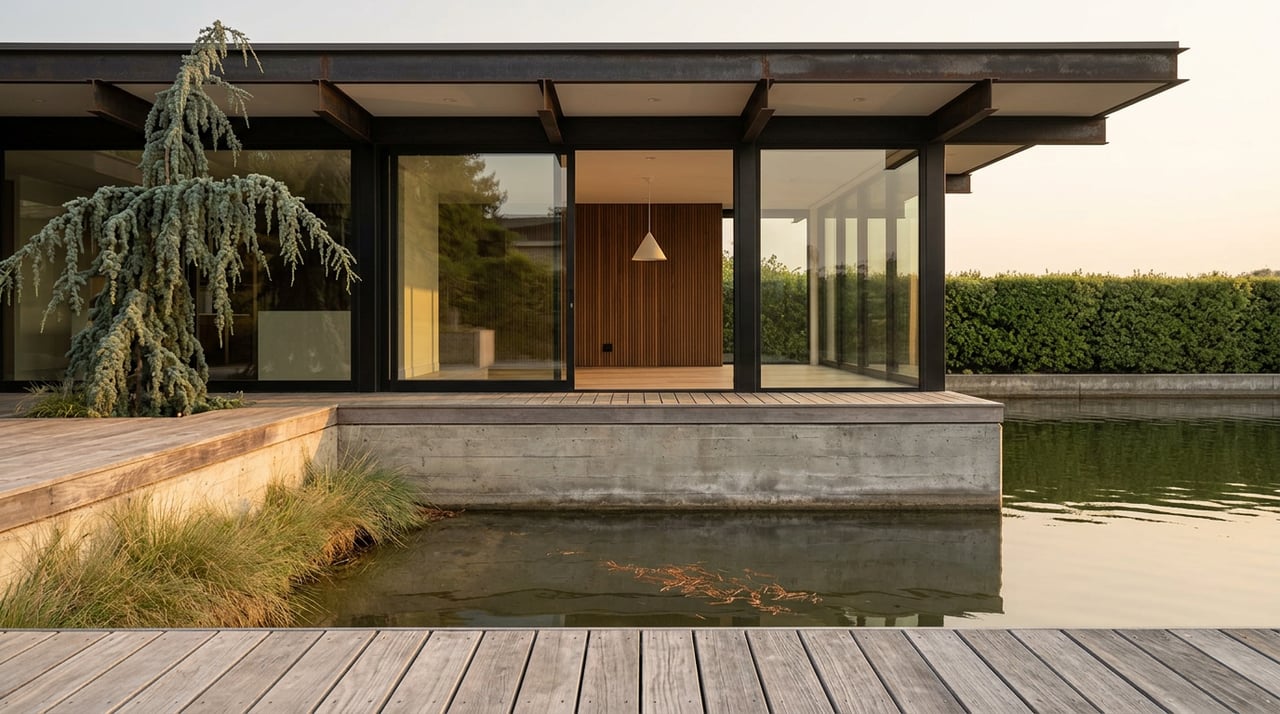
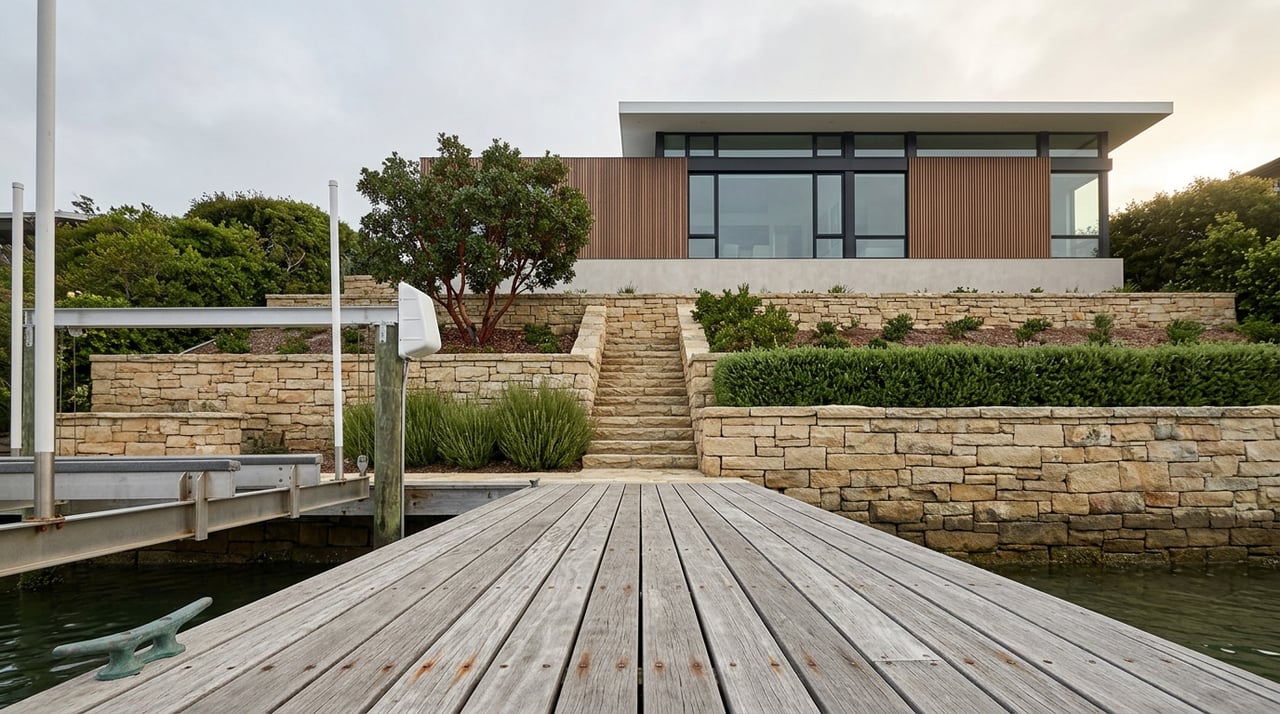
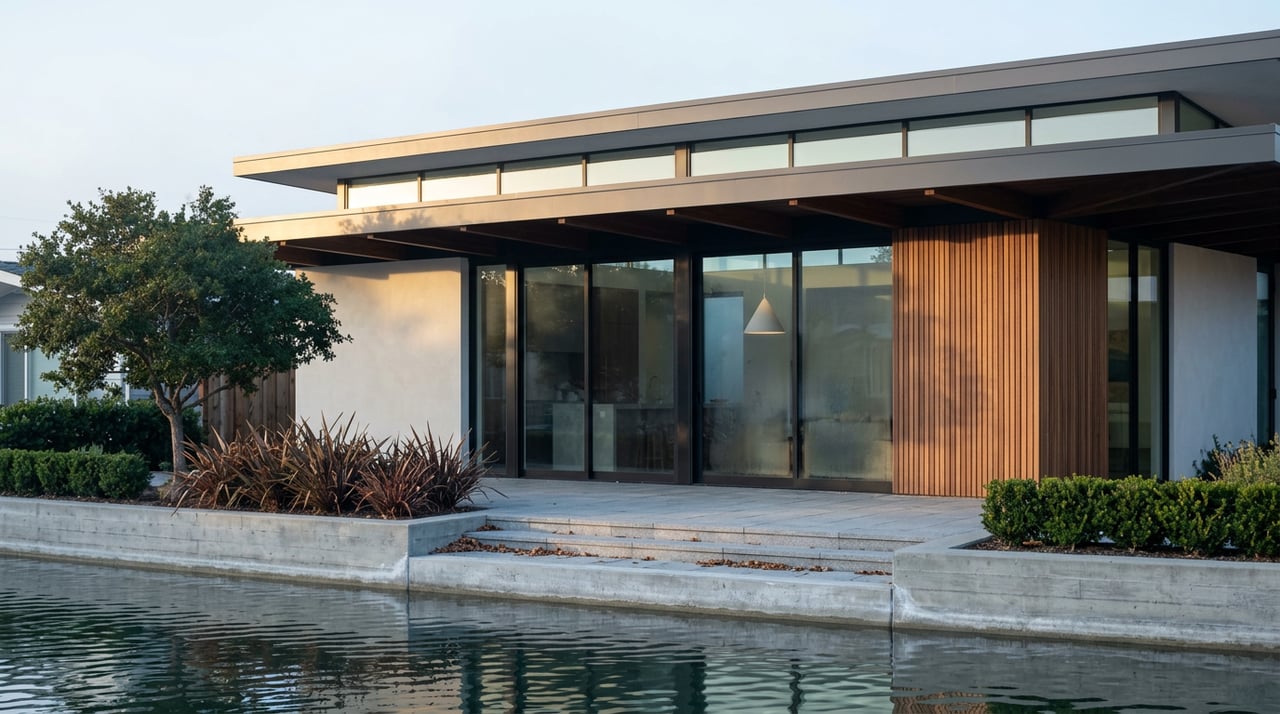
Belvedere Lagoon is a different animal, and it says so on its own paperwork. The lagoon itself was created in the early 1940s and now covers 66 acres, surrounded by roughly 260 private residences and duplexes. Unlike almost anything else in Marin, the water isn't a public amenity or a city-owned resource. It's private property, owned and maintained by the Belvedere Lagoon Property Owners' Association, a nonprofit corporation with roughly 235 members who pay to keep it running.
Membership carries real, recurring costs that a buyer needs to underwrite before writing an offer, not after. Current dues sit at $570 per quarter, and while the association held that rate flat for 2026, members approved a one-time $600 special assessment in 2025 to repair and replace bulkhead areas around the maintenance cove near the boathouse on Lagoon Road. Dredging and manual removal of invasive weeds, wages for a full-time maintenance crew, and insurance that the association itself notes has been climbing 8 to 10 percent a year are all baked into that quarterly bill.
The lagoon also restricts what you can put on the water. Association rules keep traffic to swimming and manually powered craft, such as canoes, paddleboards, and mono-hull sailboats up to roughly 15 feet, which rules out the runabouts and larger powerboats that waterfront buyers elsewhere in Marin often expect to keep at a private dock.
And any physical work on that waterfront, a new dock, a rebuilt bulkhead, isn't a private matter between homeowner and contractor. The City of Belvedere posted a Lagoon association review letter in April 2026 that references an active demolition and bulkhead building permit resubmittal from that February, a reminder that dock and shoreline projects here run through municipal review on top of association approval.
Why the Town-Wide Median Moves the Way It Does
None of this shows up when a portal reports one number for "Belvedere." It shows up in how violently that one number moves.
As of Redfin's August 2026 market snapshot, Belvedere's median sale price for the three months ending July 2026 stood at $7.5 million, up 46.5 percent from the same window a year earlier. In the identical stretch, the median price per square foot fell 23.2 percent. Only twelve homes closed in July, up from eight the year before.
Read those two numbers side by side and the contradiction is the point: the median price rose sharply while the price per square foot fell. That pattern is what happens when a handful of very large, very expensive homes close in the same window as smaller ones, pulling the median dollar figure up even as value per square foot moves the other way. With a dozen sales a month, one estate-scale closing on the Island can do more to the headline number than an entire quarter of ordinary Lagoon turnover.
The same thinness showed up clearly in fall 2025, when Belvedere Island itself recorded only three sales in October at a median of $7.8 million, and those three transactions took a median of 113 days to close, nearly triple the 41 days the year before. Three sales is not a sample size. It's a coin flip that happened to land on a number.
What This Means If You're Comparing Houses, Not Statistics
Belvedere Island and Belvedere Lagoon Property Owners' Association
None of this means Belvedere is a hard market to understand. It means it's a market where the town-wide average is the least useful number available, and the most useful number is the one specific to the parcel and the association that governs it.
A few things worth confirming before an offer goes in on either side of the bridge:
- On the Island: ask how the comp set was built. With single-digit monthly sales, a "comparable" from six months ago may not be comparable at all.
- On the Lagoon: request the association's current dues statement and ask directly whether any special assessment is pending or was recently approved.
- On the Lagoon: confirm in writing that the membership transfer will be completed and approved before close, not left as a post-closing formality.
- On either side: if the plan includes any dock, bulkhead, or shoreline work, check with the City of Belvedere on permit and design review status before assuming a timeline.
- On the Lagoon: verify what watercraft the property's existing dock, if any, is actually rated to hold, since association rules on vessel size are specific.
A Few Questions Worth Asking Before You Write an Offer
Are Belvedere Island and Belvedere Lagoon governed by the same city? Yes. Both fall under the City of Belvedere. The difference is that Lagoon properties carry an additional layer of private governance through the Belvedere Lagoon Property Owners' Association, which owns and maintains the water itself.
Does every Belvedere property have a private dock? No. Dock rights vary by parcel on both the Island and the Lagoon, and they're confirmed through the deed and title report, not assumed from the listing photos.
Why did Belvedere's median price jump 46 percent while price per square foot fell 23 percent in the same period? Because the median tracks whichever homes happened to close, not the underlying value of the housing stock. A market this thin can post both numbers moving in opposite directions in the same quarter and still be telling the truth about each one.
If you're weighing a hillside view against a waterfront membership, the honest answer is that you're weighing two different kinds of ownership, not two prices on the same spreadsheet. That's exactly the kind of distinction worth walking through property by property, before an offer, not after.
Stephanie Pratt works this stretch of Marin closely enough to know which side of the bridge a given comp actually belongs to. If you're comparing Belvedere properties and want a read on what a specific address's carrying costs and governance actually look like, schedule a private consultation or request a confidential home valuation.